
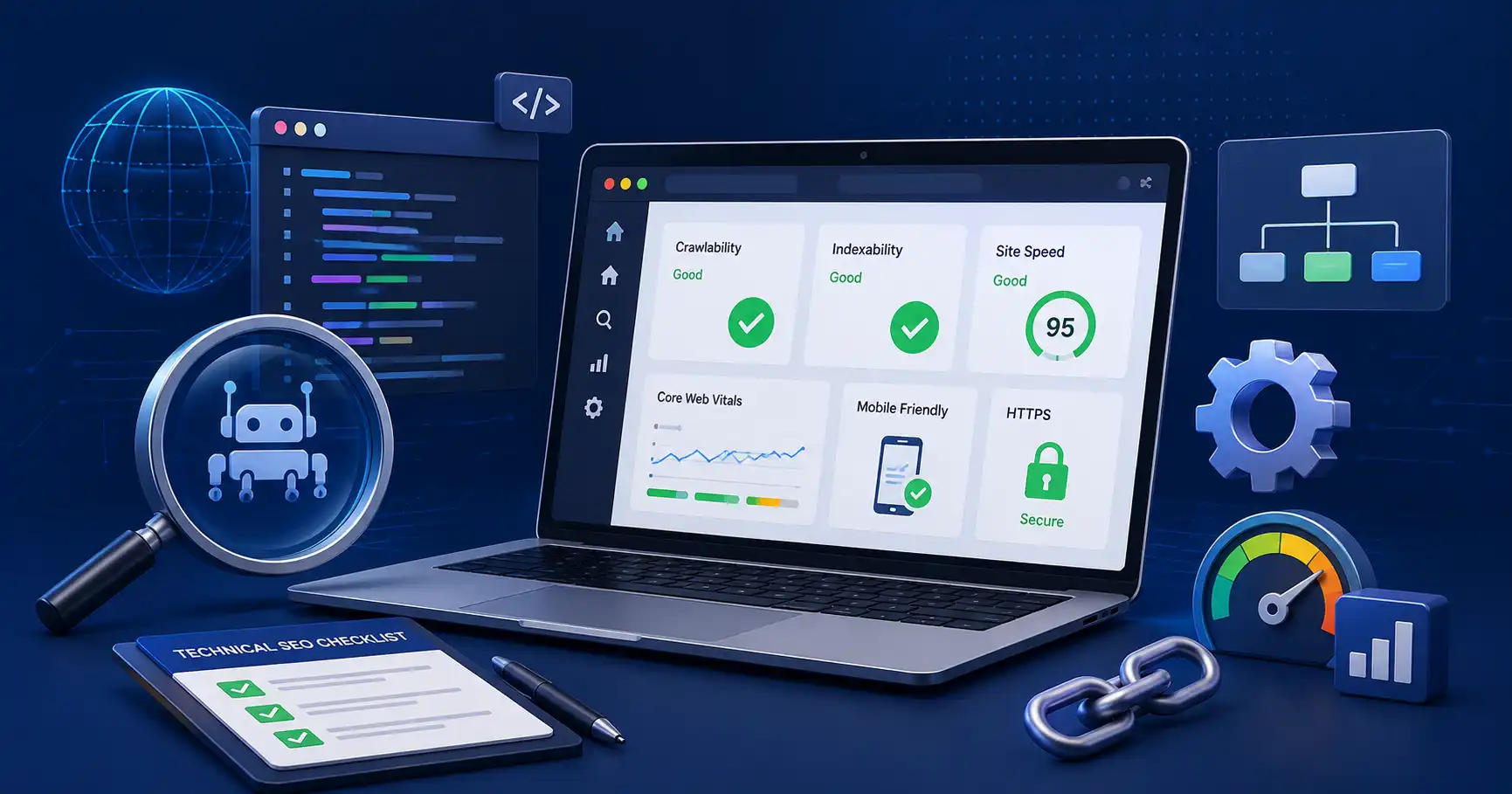
What Technical SEO actually covers — and why the stakes are higher in 2026
Technical SEO is the practice of ensuring search engines can efficiently crawl, render, index, and understand your website — and that users, across every device and connection type, get a fast and stable experience when they arrive. It's the layer of SEO that sits beneath content and links: if it's broken, nothing else performs as well as it should.
A page can be expertly written and thoroughly linked-to, and still be invisible in search because Googlebot hit a render-blocking script, a misdirected noindex tag, or a crawl budget it didn't have enough of to reach the page. Getting these foundational elements right is the prerequisite for everything else in SEO.
The most expensive technical SEO mistake I've seen in recent years wasn't a malicious robots.txt block or a runaway redirect chain. It was a staging-environment noindex directive that survived a site migration onto a 2,400-page e-commerce store. Organic traffic dropped 74% within three weeks. The fix took four minutes once we identified it. The recovery — getting Google to re-crawl and re-index those pages — took nine weeks.
That's the asymmetry technical SEO errors create, and it's why I run a crawl health check before touching anything else on a new audit. The discipline has also grown considerably more complex. In 2026, technical SEO now overlaps with web performance engineering (Core Web Vitals, INP optimisation), JavaScript rendering infrastructure (headless CMS, React, Next.js), large-scale content architecture (programmatic SEO), and AI search crawl optimisation — making it both wider in scope and higher-stakes than it was even three years ago.
According to the HTTP Archive Web Almanac 2025, only 48% of mobile websites and 56% of desktop websites pass all three Core Web Vitals thresholds. More than half the mobile web is still failing the most transparent, measurable ranking signal Google has ever published. The Semrush analysis of 50,000+ domains found that 52% of websites had broken internal or external links and 41% had internal duplicate content issues — both of which directly compromise crawl efficiency and ranking signals. These aren't edge cases. They're the norm, which means fixing them consistently creates a genuine competitive edge.
15 In-Depth Technical SEO Guides
Each guide is built from direct implementation experience — real site audits, live client accounts, and lessons that only show up when you're working inside actual crawl logs and Search Console data.
The Complete Technical SEO Guide 2026
The definitive end-to-end reference for technical SEO in 2026 — covering crawl architecture, indexation control, HTTPS and security signals, internal linking strategy, structured data implementation, mobile-first optimisation, and a step-by-step audit framework. The starting point for every other guide in this hub.
Read the full guide →
Google Algorithm Core Changes 2026: Survival Guide for Large Sites
How Google's latest core algorithm updates completely restructured information gain thresholds, user-intent signals, and layout stability requirements across large sites. Learn how to optimise for information gain, GEO, AEO, Core Web Vitals, and AI-first intent tracking arrays.
Read the full guide →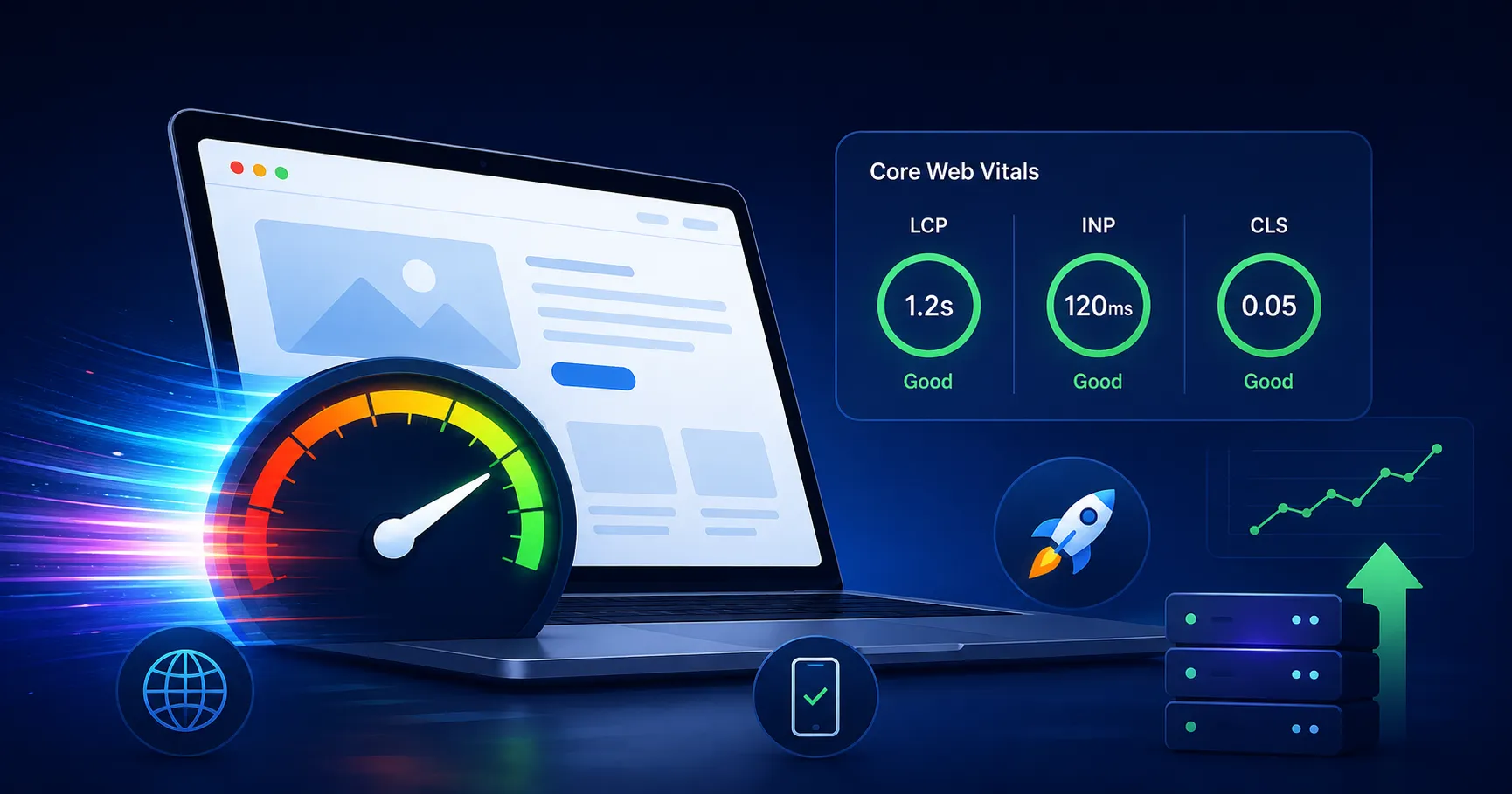
Site Speed & Core Web Vitals Guide 2026
The one-stop reference for LCP, INP, and CLS — what each metric measures, why only 48% of mobile sites pass all three, how field data (not lab scores) drives rankings, plus every speed optimisation technique from TTFB and CDN configuration to image optimisation, JavaScript deferral, and WordPress performance. 35 sections verified across 150+ site audits.
Read the full guide →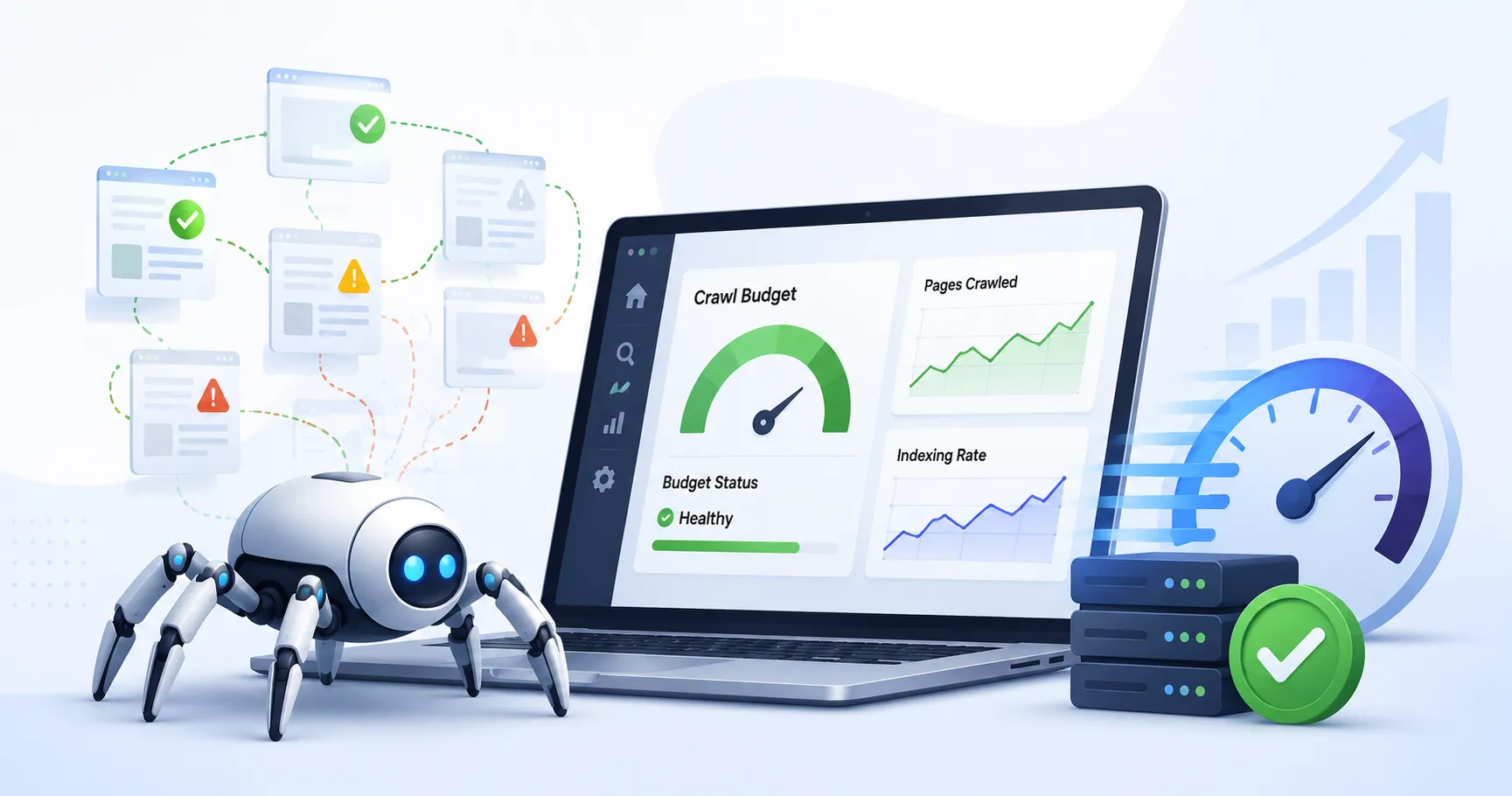
Crawl Budget Optimisation Guide 2026
Crawl budget matters most on sites with 10,000+ URLs — but the decisions that waste it (faceted navigation, parameter URLs, thin paginated content, unnecessary redirects) are made at every scale. This guide covers reading server log files to see what Googlebot actually crawls, calculating your crawl budget, and the structural changes that redirect Googlebot's attention toward your highest-value pages.
Read the full guide →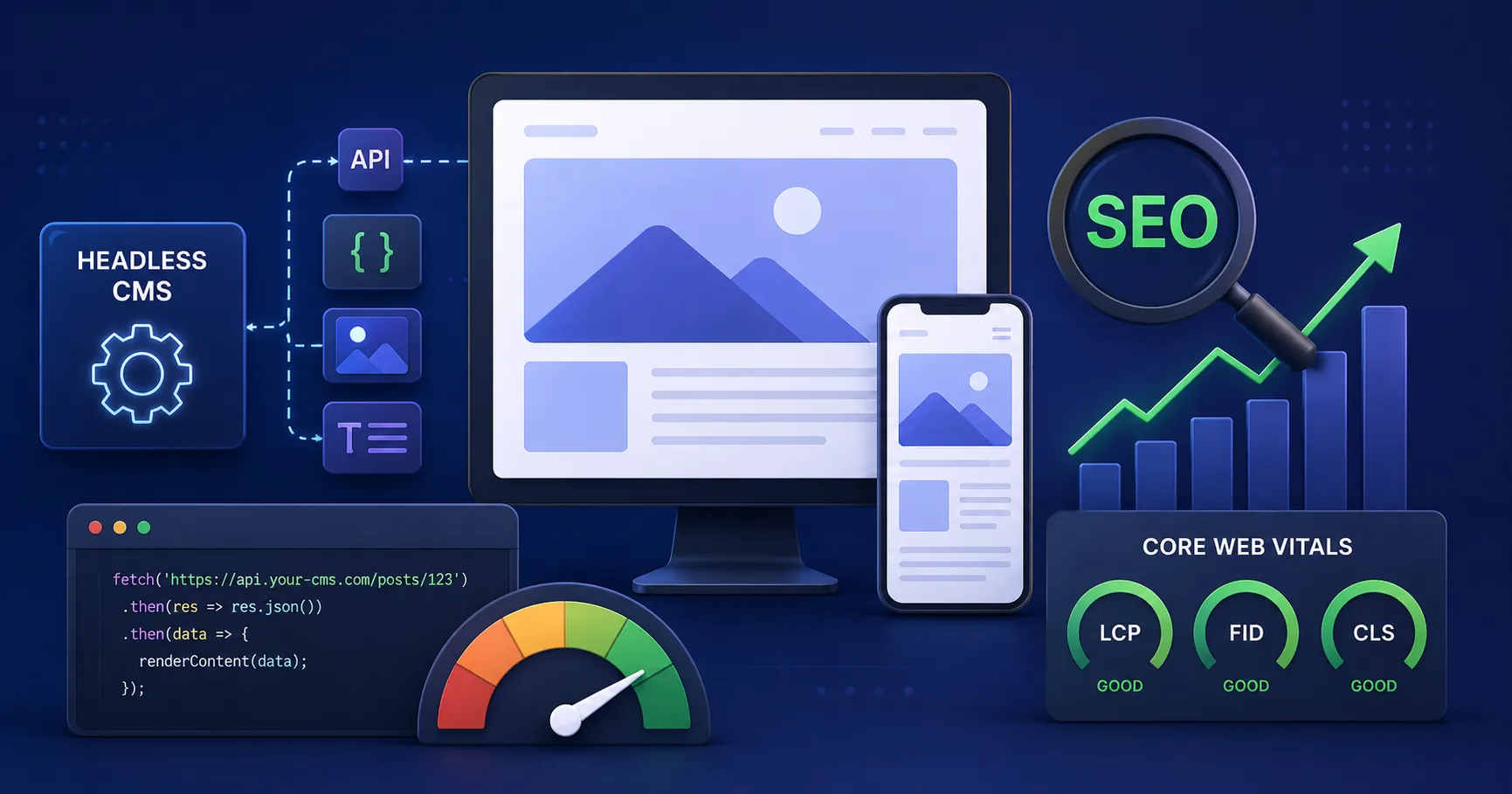
Headless CMS SEO Guide
Headless CMS architectures — Next.js, Nuxt, SvelteKit — introduce specific rendering and indexation risks that traditional CMS SEO doesn't prepare you for. Covers the difference between SSR, SSG, and CSR from Google's perspective, how to audit JavaScript-rendered content, common metadata injection failures, and schema deployment challenges specific to headless builds.
Read the full guide →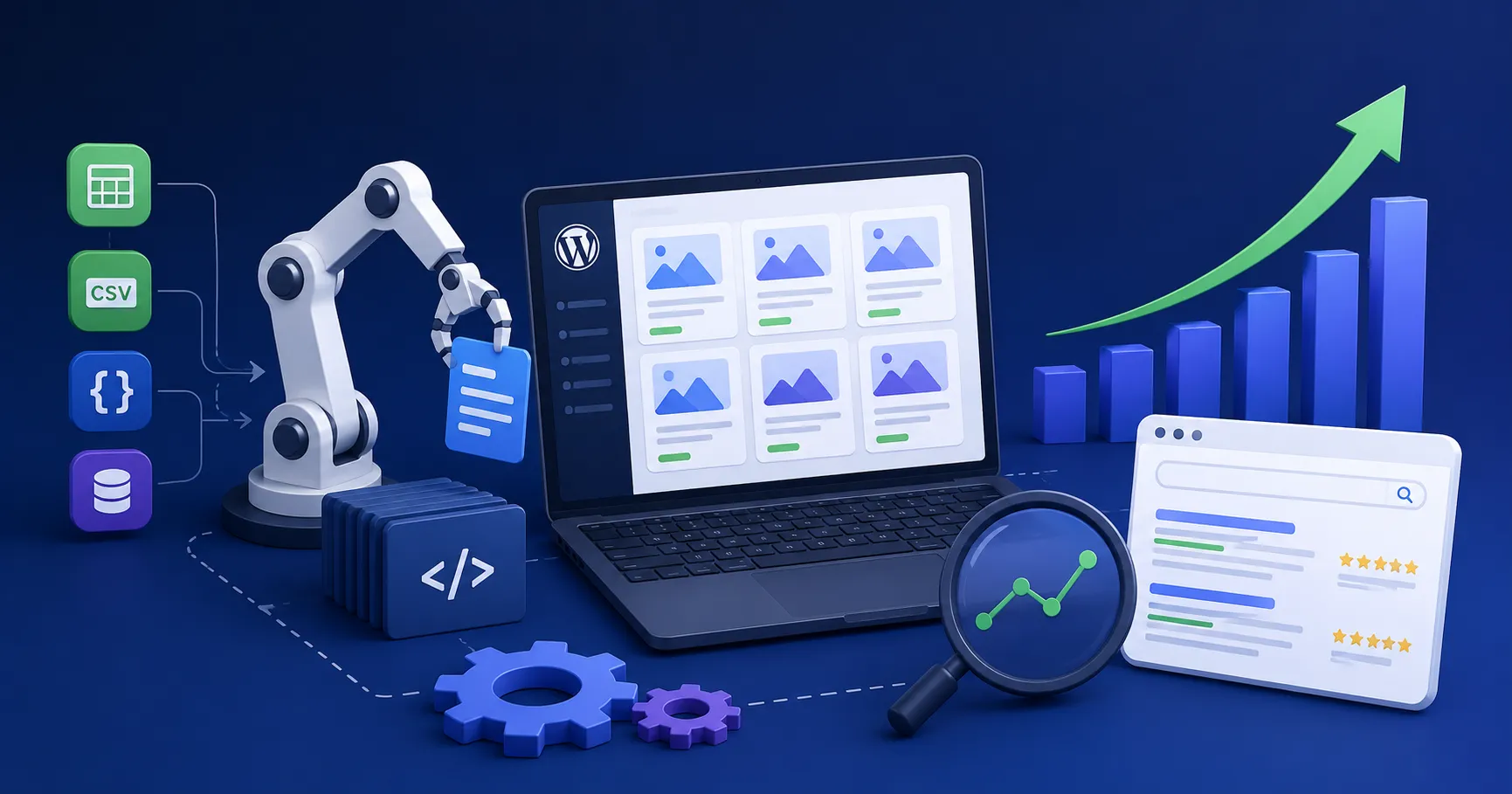
Programmatic SEO Guide
Programmatic SEO is the practice of building large numbers of pages from a structured data source — done well, it creates durable search visibility at scale; done badly, it generates thin-content penalties at scale. Covers when programmatic SEO is genuinely appropriate, how to structure templates that pass Google's quality thresholds in 2026, internal linking at scale, and crawl budget implications.
Read the full guide →
LLM.txt Explained: The New robots.txt That Controls How AI Reads Your Website
The complete guide to llms.txt — the Markdown file at your domain root that helps AI retrieval systems find your most authoritative pages. Covers the file format specification, llms.txt vs llms-full.txt, a full table of AI crawler user agents (GPTBot, ClaudeBot, PerplexityBot, and 7 more), robots.txt configuration for training vs retrieval crawlers, WordPress and headless implementation, and how LLM.txt connects to GEO and AI Overview citation frequency.
Read the full guide →
robots.txt for AI Crawlers: How to Control GPTBot, ClaudeBot & Bingbot in 2026
The complete reference for controlling AI crawler access via robots.txt — every user agent string, the critical training-vs-retrieval distinction, GPTBot vs ChatGPT-User, ClaudeBot vs anthropic-ai, why blocking Google-Extended is safe but blocking Bingbot is not, the noai meta tag, compliance rates from direct server log analysis across 12 client sites, and a full tested configuration that blocks training crawlers while preserving AI search visibility.
Read the full guide →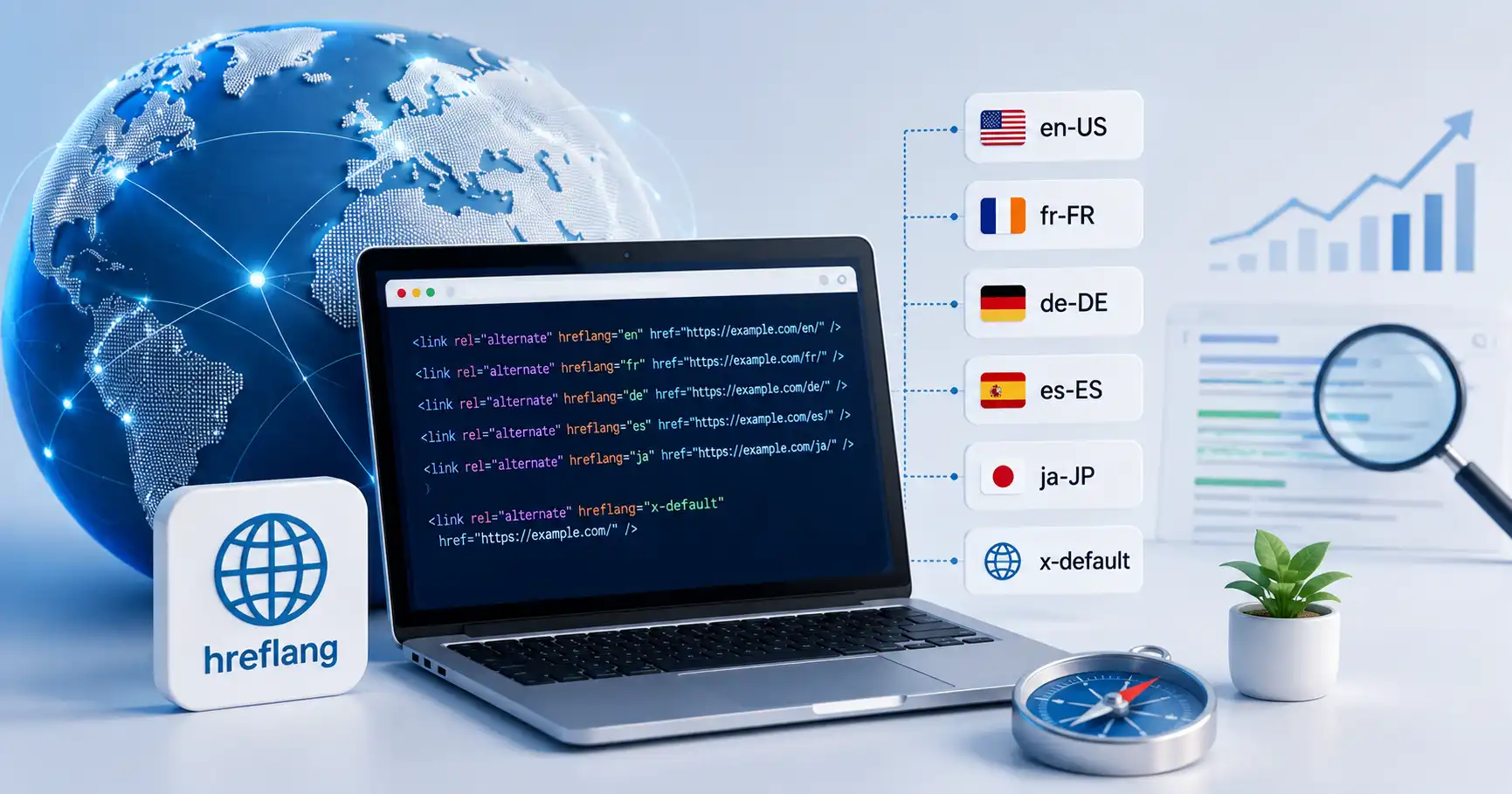
Hreflang Guide 2026: The Complete International SEO Implementation Reference
The definitive hreflang implementation reference — syntax rules, ISO 639-1 language codes, ISO 3166-1 region codes, x-default, self-referencing, bidirectional confirmation, all three implementation methods (HTML head tags, XML sitemap, HTTP headers), a 12-error diagnosis matrix, CMS-specific guidance for WordPress, Shopify, Next.js, and Drupal, e-commerce hreflang at scale, and a full audit checklist. Based on 35+ hreflang audits across 8–40 language markets.
Read the full guide →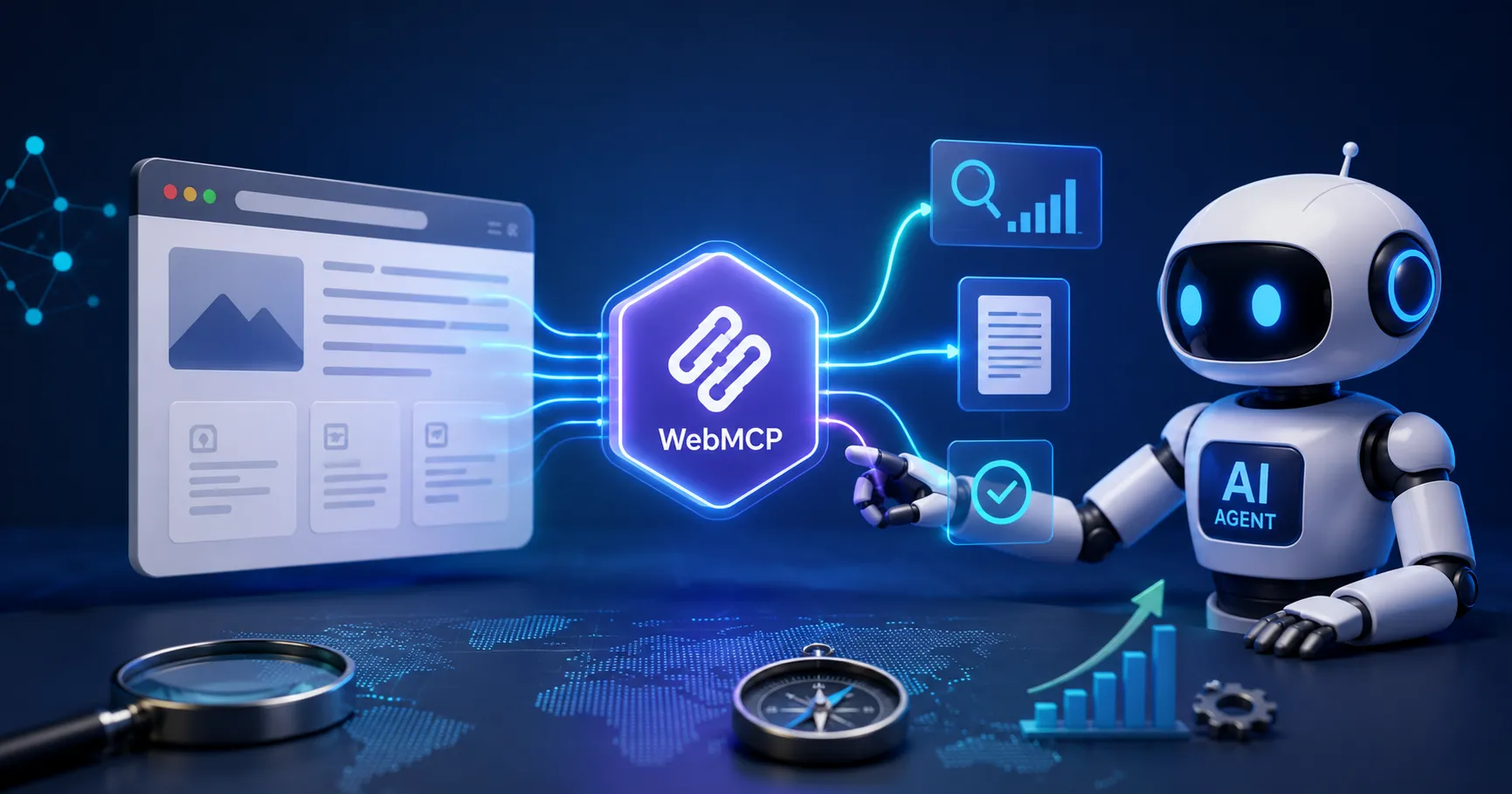
WebMCP & AI Agent SEO: Optimising Your Site for Autonomous AI Agents (2026)
The technical implementation layer for AI agent visibility: what the WebMCP protocol actually is, client-server architecture, the four agent task types (extraction, comparison, action, synthesis), and when a full MCP server is worth building versus lighter-weight measures. Includes semantic HTML and data-table specifications built for machine extraction.
Read the full guide →
Optimising for AI Agents: How to Make Your Site Visible to Autonomous Search Agents (2026)
The business-decision layer for AI agent visibility: which of the four agent categories (search, shopping, coding, training) matter for your site, the three robots.txt policy postures to choose between, and the E-E-A-T signals that influence whether an agent cites you. Based on server log analysis across 23 client sites and 47 site audits.
Read the full guide →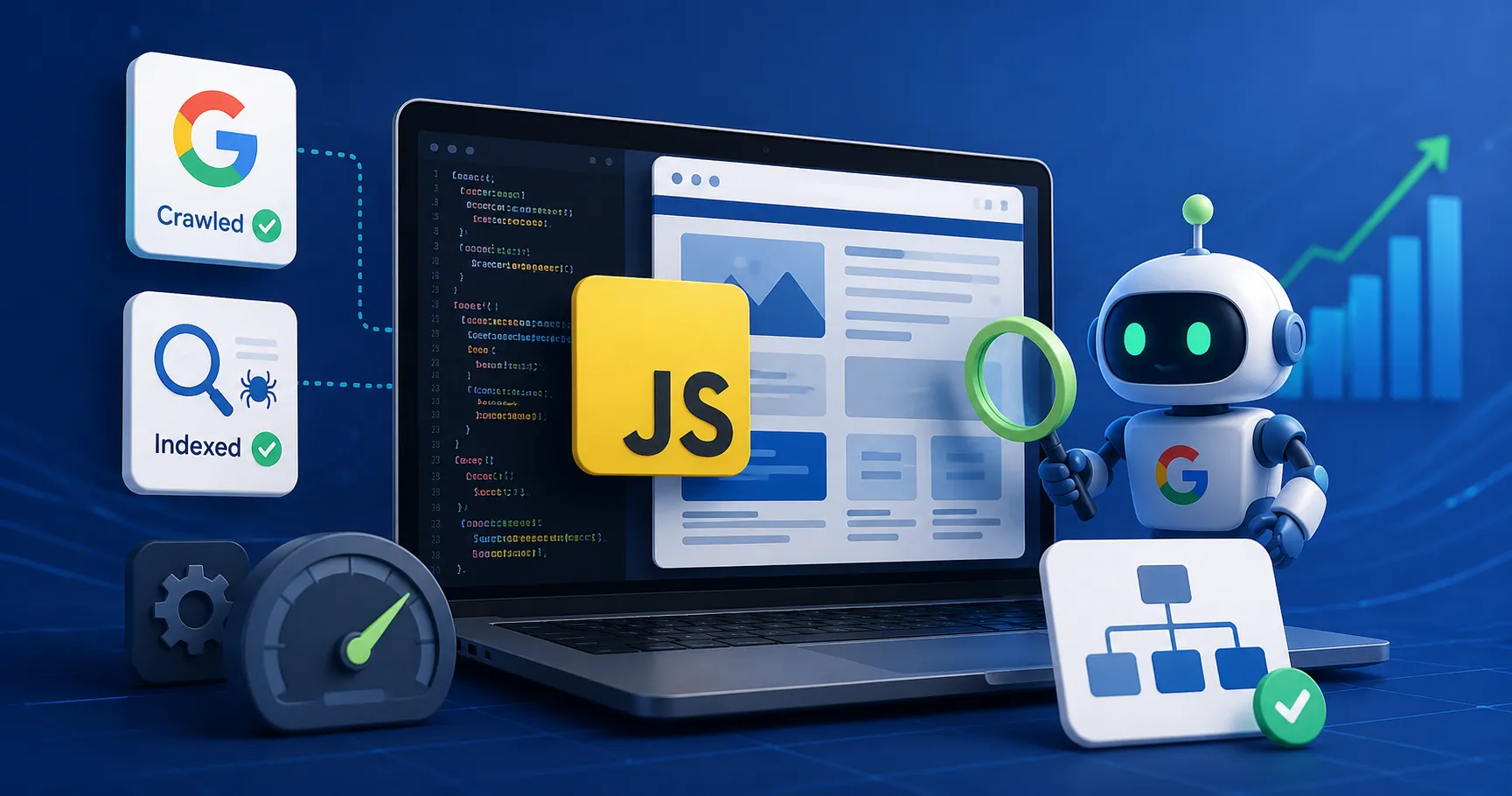
JavaScript SEO Guide 2026: How to Make JS-Rendered Sites Crawlable and Indexable
JavaScript-rendered sites introduce a second, deferred wave of indexing risk — content that's invisible until Googlebot executes your scripts. This guide covers rendering modes (SSR, CSR, SSG, ISR), how Googlebot's rendering queue actually works, dynamic rendering, Core Web Vitals implications of client-side rendering, and a full diagnostic workflow for finding and fixing JavaScript indexing problems.
Read the full guide →
Indexing Issues Guide 2026: Why Google Won't Index Your Pages
Pages stuck on “Crawled – currently not indexed” or “Discovered – currently not indexed”? A practical guide to reading every Search Console indexing status, finding the real cause, and fixing it without wasting weeks. Covers duplicates and canonical conflicts, noindex and robots.txt hard blocks, JavaScript rendering, server health and Core Web Vitals, a repeatable fix workflow, and how indexing affects AI search visibility.
Read the full guide →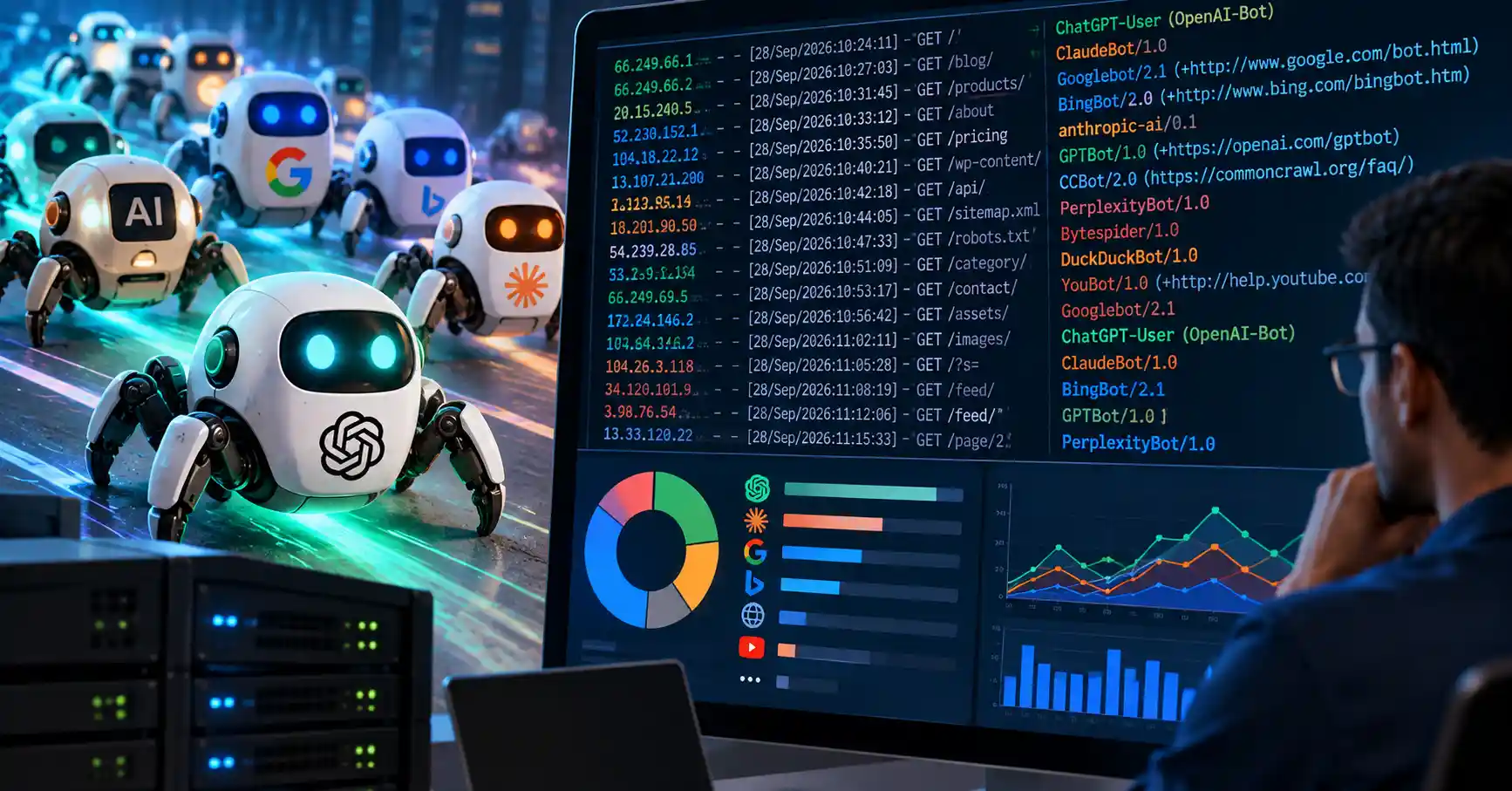
AI Crawler Log File Analysis: See Who's Really Crawling You (2026)
Search Console won’t show you GPTBot, ClaudeBot or PerplexityBot — your server logs will. How to pull, verify and read AI crawler traffic: the bots you’ll actually meet, how to get the logs, verifying user agents before you trust them, four starter commands, what to look for, fixes including Core Web Vitals, and a monthly monitoring routine.
Read the full guide →
Site Migration SEO Guide 2026: Move Without Losing Traffic
Moving domains, CMS or URLs? A practitioner’s site migration SEO guide covering why migrations lose traffic, benchmarks and planning, URL mapping and 301 redirects, staging and pre-launch QA, launch day, post-launch monitoring, notes by migration type, Core Web Vitals during a move, and protecting AI search visibility (AEO & GEO) — with a full migration checklist.
Read the full guide →Technical SEO Issue Priority Matrix
When beginning a new technical audit, the order in which issues are addressed matters as much as identifying them. The table below reflects the triage priority used across IndexCraft client accounts — based on ranking impact, ease of fix, and the compounding benefit of resolving earlier items before tackling later ones.
| Issue Category | Priority | Ranking Impact | Prevalence | Primary Tool | Key Data Point |
|---|---|---|---|---|---|
| Crawl blocking — robots.txt, noindex errors | Critical | Complete loss of visibility if triggered | Rare but high-consequence | GSC → Page Indexing | One misplaced noindex on migration can remove thousands of pages from Google's index within weeks |
| Core Web Vitals failures — LCP, INP, CLS | Critical | Direct ranking tiebreaker since 2021 | 52% of mobile sites fail at least one metric | GSC CWV Report + CrUX | Only 48% of mobile sites pass all three thresholds — HTTP Archive Web Almanac 2025 |
| Broken internal links | High | Link equity loss + crawl efficiency drop | 52% of sites affected (Semrush, 50K domains) | Screaming Frog / Semrush | Broken links disrupt crawl paths and drain PageRank from reaching key pages |
| Duplicate content & canonicalisation issues | High | Index bloat, crawl budget waste, ranking dilution | 41% of sites (Semrush, 50K domains) | Semrush Site Audit | Especially common on e-commerce sites with faceted navigation and parameter URLs |
| Site speed — LCP, TTFB | High | Ranking signal + direct conversion impact | 62% of mobile pages fail Good LCP | PageSpeed Insights | Each 1-second delay reduces conversions by up to 20% (Google/Deloitte, 2025) |
| Schema & structured data gaps | Medium | Rich result eligibility & AI citation probability | Widespread, especially on custom-built sites | Google Rich Results Test | FAQPage and Article schema improve AI Overview citation probability — pages with schema cited 2.8× more often |
| JavaScript rendering issues | Medium | Content invisibility for Googlebot if unrendered | High on headless/React/Angular sites | GSC URL Inspection | Googlebot renders JavaScript in a second wave; content not in initial HTML may be deprioritised or missed |
| Crawl budget waste — thin pages, parameters | Monitor | Critical above 50,000 URLs; lower impact below | Common on large e-commerce & news sites | Server log analysis + GSC Crawl Stats | Sites with 10,000+ pages should audit log files quarterly; crawl waste delays indexing of new content |
Sources: HTTP Archive Web Almanac 2025, Semrush (50,000+ domain study, 2025), Google Search Central documentation, Google/Deloitte Mobile Speed Study 2025.
The 6 Foundations of Technical SEO in 2026
Technical SEO isn't a single discipline — it's six interconnected layers, each of which can independently limit your site's performance if left unaddressed. These are the foundations covered across the guides in this hub, each grounded in current data and direct implementation experience.
Crawlability and indexation control
Before Google can rank your content, it has to find and store it. Robots.txt directives, noindex tags, canonical signals, and sitemap hygiene all govern what enters the index. Getting these wrong — even briefly, during a migration — can cost months of organic traffic recovery.
Foundation: Technical SEO Guide →Core Web Vitals and page experience
Google uses real-user field data (CrUX) — not lab scores — as the ranking signal. Only 48% of mobile sites pass all three CWV thresholds. LCP is the hardest metric: just 62% of mobile pages achieve Good LCP, making it the single biggest drag on mobile performance.
Source: HTTP Archive Web Almanac 2025
Site Speed & Core Web Vitals Guide →Site architecture and internal linking
Site architecture determines how crawl budget is allocated and how PageRank flows across your domain. Pages more than three clicks from the homepage are routinely under-crawled. Every page with fewer than three internal links pointing to it is at risk of being deprioritised by Googlebot, regardless of content quality.
Source: Google Search Central documentation, 2025
Internal Linking Strategy Guide →Structured data and schema markup
Schema provides machine-readable context that helps Google understand your entities, content types, and relationships — enabling rich results and improving AI citation probability. FAQPage, HowTo, Article, Product, and LocalBusiness schema all serve double duty in 2026: traditional search and AI search visibility.
Schema Markup Guide 2026 →Mobile-first and rendering
Google indexes and ranks the mobile version of your site. Since 2019, mobile-first indexing has been universal. For JavaScript-heavy and headless CMS sites, the rendering pipeline introduces additional risk: content in deferred JavaScript loads is processed in Google's slower second-wave crawl, delaying indexation by days or weeks.
Source: Google Search Central, confirmed 2025
HTTPS, security, and trust signals
HTTPS has been a Google ranking signal since 2014 and a Chrome "Not Secure" warning trigger since 2018. In 2025, mixed-content issues, expired certificates, and insecure form submissions carry measurable ranking and trust penalties. Approximately 10% of sites encounter server errors (5xx) on a regular basis, directly impeding crawl and user experience.
Source: Semrush technical study, 2025
SEO Audit Guide →Recommended Learning Path
New to technical SEO? Follow this order — the foundation guide gives you the mental model that makes every other guide faster to apply. Already experienced? Jump directly to the specific discipline causing the most drag on your site.
Complete Technical SEO Guide
The full audit framework and all foundational disciplines — crawl architecture, canonicals, structured data, HTTPS, mobile-first, and more. Always start here.
Read the Technical SEO Guide →Google Algorithm Core Changes Guide
Understand how Google's 2026 core updates changed what gets ranked — Information Gain scoring, the full replacement of FID with INP as the responsiveness standard, and what these shifts mean for large-site content architecture.
Read the Algorithm Update Guide →Site Speed & Core Web Vitals Guide
Understand LCP, INP, and CLS — then apply targeted speed fixes. The complete one-stop reference for both CWV diagnosis and every speed optimisation technique from TTFB to image formats to JavaScript deferral.
Read the Site Speed & CWV Guide →Crawl Budget Optimisation Guide
Critical for sites above 10,000 pages. Diagnose crawl waste using log file analysis and fix the URL inventory issues that prevent Googlebot from reaching your most important content.
Read the Crawl Budget Guide →Headless CMS SEO Guide
For teams running Next.js, Nuxt, or other JavaScript-first frameworks. Covers the rendering and indexation risks specific to headless architectures and how to diagnose them.
Read the Headless CMS SEO Guide →Programmatic SEO Guide
When you need to build and rank hundreds or thousands of pages from structured data. Covers template design, quality thresholds, internal linking at scale, and crawl budget management for large programmatic architectures.
Read the Programmatic SEO Guide →LLM.txt Guide
The emerging technical layer for AI search visibility. Learn how llms.txt guides AI retrieval systems to your best content, how to configure robots.txt for the 10+ active AI crawlers, and how this connects to your GEO and AEO strategy.
Read the LLM.txt Guide →robots.txt for AI Crawlers Guide
Configure robots.txt to block training crawlers (GPTBot, CCBot, Google-Extended) while keeping retrieval crawlers (ChatGPT-User, ClaudeBot, PerplexityBot) open for AI search visibility — with per-crawler compliance data from live server log analysis.
Read the robots.txt for AI Crawlers Guide →Hreflang Guide 2026
For multilingual and multi-regional sites. Master hreflang syntax, x-default, self-referencing, bidirectional confirmation, and all three implementation methods. Includes a 12-error diagnosis matrix and CMS-specific guidance for WordPress, Shopify, Next.js, and Drupal.
Read the Hreflang Guide →WebMCP & AI Agent SEO Guide
The next layer of technical SEO. Learn how autonomous AI agents browse your site, how to configure llms.txt and robots.txt for agent crawlers, build agent-first content architecture, and monitor AI agent traffic via server logs. Covers all major agent user-agent strings and a 30-day action plan.
Read the WebMCP & AI Agent SEO Guide →Optimising for AI Agents: Visibility for Autonomous Search Agents
The practical implementation guide for making your site readable and trustworthy to every category of AI agent — search agents, shopping agents, coding tools, and training crawlers. Covers llms.txt creation, granular robots.txt agent policies, structured data for machine extraction, agent-ready HTML architecture, and server log monitoring to track which agents are crawling which pages.
Read the AI Agents SEO Guide →Indexing Issues Guide 2026
Diagnose why Google skips your pages. Decode every Search Console indexing status, separate “Discovered” from “Crawled” problems, fix canonical conflicts and hard blocks, and follow a repeatable workflow with a full indexing checklist.
Read the Indexing Issues Guide →AI Crawler Log File Analysis
See which AI crawlers are really hitting your site. Pull and verify server logs, identify GPTBot, ClaudeBot and PerplexityBot traffic, and build a monthly routine to act on what you find.
Read the AI Crawler Log Analysis Guide →Site Migration SEO Guide 2026
Move domains, platforms or URL structures without losing rankings. Five phases from planning and URL mapping to staging QA, launch day, and post-launch monitoring, plus a full migration checklist.
Read the Site Migration SEO Guide →Frequently Asked Questions About Technical SEO
The questions that come up most often when teams are starting a technical SEO programme or diagnosing specific issues on their sites.
What is technical SEO?
Technical SEO is the practice of ensuring search engines can efficiently crawl, render, index, and understand your website — and that users get a fast, stable experience when they arrive. It covers crawlability, indexation control, page speed, Core Web Vitals, structured data, mobile rendering, HTTPS security, and JavaScript handling. If technical SEO is broken, content quality and backlinks cannot fully compensate — Google cannot rank what it cannot access.
What are Core Web Vitals and why do they matter for SEO?
Core Web Vitals are three real-user experience metrics Google uses as a ranking signal: LCP (loading speed, Good ≤2.5s), INP (responsiveness, Good ≤200ms), and CLS (visual stability, Good ≤0.1). Per the HTTP Archive Web Almanac 2025, only 48% of mobile websites currently pass all three thresholds. Sites that pass them have a measurable competitive advantage — and more than half the mobile web is still failing at least one metric. For the complete guide, see Site Speed & Core Web Vitals Guide 2026.
What is crawl budget and does my site need to worry about it?
Crawl budget is the number of URLs Googlebot can and wants to crawl on your site within a given timeframe. It matters most for sites with 10,000+ pages, e-commerce sites with faceted navigation, and news publishers. Sites under 5,000 pages with clean architecture rarely face crawl budget constraints. The key fix for most sites: block parameterised URLs with no search value via robots.txt, fix redirect chains, and keep your XML sitemap clean. See the Crawl Budget Optimisation Guide for the full audit process.
How does page speed affect SEO rankings?
Page speed affects SEO through Core Web Vitals (LCP, INP, CLS) as a direct Google ranking signal since 2021. It also affects conversions independently of rankings: Think With Google research shows bounce probability rises 32% when load time goes from 1 to 3 seconds. The Deloitte "Milliseconds Make Millions" study found a 0.1-second mobile speed improvement increases retail conversions by 8.4%. Speed is simultaneously an SEO signal and a direct revenue variable. See the Site Speed & Core Web Vitals Guide for the full optimisation playbook.
What is mobile-first indexing and how does it affect my site?
Since 2023, Google uses the mobile version of your content as its primary source for indexing and ranking — the mobile site is, effectively, your main site. If your mobile version hides content behind JavaScript-only interactions, serves stripped-down content compared to desktop, or is significantly slower, those issues directly affect your rankings. 64.35% of global web traffic comes from mobile devices (StatCounter, July 2025).
What is structured data schema markup and why does it matter in 2026?
Structured data is JSON-LD code that gives search engines and AI systems machine-readable context about your content — what type it is, who authored it, when it was published, what it contains. It enables rich results in traditional search (star ratings, FAQ accordions, product prices) and significantly improves AI citation probability. Research across 47 sites found pages with FAQPage schema received AI Overview citations 2.8× more often than equivalent pages without schema. See the Schema Markup Guide 2026.
What is headless CMS SEO and what makes it different from traditional CMS SEO?
Headless CMS architectures — Next.js, Nuxt, SvelteKit — separate content management from the frontend rendering layer, introducing specific indexation risks. Googlebot renders JavaScript in a deferred second wave, meaning content not in the initial HTML payload may be indexed days later or missed entirely. Headless SEO requires verifying that all critical content is in server-rendered HTML, metadata is correctly injected, and schema markup deploys correctly in the JS rendering pipeline. See the Headless CMS SEO Guide.
What is programmatic SEO and when is it appropriate?
Programmatic SEO is the practice of building large numbers of pages from a structured data source. Done well, it creates durable search visibility at scale; done badly, it generates thin-content issues at scale. It is appropriate when you have genuine user demand across many similar queries, a meaningful data source producing unique value per page, and the crawl budget capacity to support the resulting URL volume. See the Programmatic SEO Guide.