

What AI Search SEO Actually Means in 2026 — and Why the Rules Changed
AI Search SEO — also called Generative Engine Optimisation (GEO) or Answer Engine Optimisation (AEO) — is the practice of making your content, brand, and website visible inside AI-generated answers, not just traditional blue-link results. The shift happened faster than most practitioners expected. The same user who used to scroll through a SERP in 2023 is now asking ChatGPT which agency to hire, consulting Perplexity before a B2B purchase, and reading an AI Overview before choosing a local service. Search didn't die — it fragmented.
I started tracking AI Overviews across client accounts in early 2024, when they were still a lab experiment. By Q3 2024, I was watching them displace featured snippets on queries where I'd spent months building #1 rankings. That moment forced me to rebuild my entire content audit framework around a new question: "Would an AI platform cite this page?" — not just "Does this page rank?" The guides in this hub are a direct product of that transition.
The signals that earn you a citation inside an AI answer are different from — though not entirely separate from — classical SEO signals. Structured data, clear entity signals, authoritative topical coverage, content freshness, and off-site mention depth all matter in ways they never did when ranking algorithms primarily counted links and keywords. According to SE Ranking's analysis of 2.3 million pages, domain traffic is now the single strongest predictor of AI citations (SHAP value: 0.63), while branded web mentions correlate with AI Overview appearances at 0.664, far ahead of backlinks at 0.218.
The GEO market tells the same story with numbers: valued at $848 million in 2025, it's projected to reach $33.7 billion by 2034 at a 50.5% CAGR, according to Dimension Market Research. This isn't a niche tactic — it's the next core competency in search marketing. This hub covers all of it: the strategy, the platforms, the tools, and the tactics that move the needle on AI visibility, built from direct implementation rather than theoretical frameworks.
12 In-Depth AI Search SEO Guides
Each guide is a standalone deep-dive built from direct implementation across live client accounts — not vendor case studies or theoretical frameworks.

GEO & AEO: How to Rank in AI Overviews and Large Language Models
The definitive foundation guide to Generative Engine Optimisation and Answer Engine Optimisation. Covers the six universal citation signals backed by current research, how Google AI Overviews select cited sources, what ChatGPT Search surfaces and why, and a platform-by-platform implementation roadmap. Start here before anything else.

AEO & GEO Strategy for New Websites
If you're building from scratch in 2026, this guide shows how to architect a new website with AI citation in mind from day one — covering site structure, entity clarity, schema deployment, and the content decisions that help AI platforms trust a new domain faster than link-building alone can achieve.

AI SEO Tools Guide 2026
A practitioner-tested review of the AI-native SEO tools that have earned a real place in client workflows — covering AI Overview monitoring, citation tracking, automated content auditing, and the tools that make bold claims without delivering. Only tools I've used on live accounts make the list.

Claude AI SEO Automation
How to use Claude as a practical SEO automation layer — from bulk meta description generation and content gap analysis to schema drafting, internal link audits, and building reusable prompt libraries for repeatable SEO workflows. Covers the prompts used week-to-week across client accounts.
Google AI Mode SEO Guide 2026
Google AI Mode is the most significant restructuring of search results since featured snippets — and it operates on different citation logic than standard AI Overviews. Only 13.7% of citations overlap between the two (Ahrefs, December 2025). This guide covers how AI Mode selects sources and which optimisation moves actually shift citation probability.

Keyword Research for Conversational and AI Queries
How keyword research changes when your audience types full questions rather than fragments. ChatGPT prompts average around 60 words — compared to Google's 3.4 (Similarweb, 2025). This guide covers intent mapping for conversational queries, identifying question clusters AI platforms answer most, and building a keyword architecture for both traditional and AI-native search.

Optimise for Perplexity, ChatGPT & Gemini Search
A platform-by-platform breakdown of how Perplexity AI, ChatGPT Search, and Google Gemini each source and cite content differently — with specific, actionable changes to your website and off-site presence. Perplexity now drives nearly 15% of all AI referral traffic (SE Ranking, 2025), making it a channel that can no longer be treated as an afterthought.
Voice Search & Conversational AEO Guide 2026
How to get cited by Siri, Alexa+, Google Gemini, and ChatGPT Voice — now that all four run on LLMs instead of scripted skills. Covers conversational keyword research, answer-first content structure built around a 25–35 word spoken answer, SpeakableSpecification schema, "near me" local voice optimisation, and how to measure a channel GA4 can't track directly.
AI Citation Rate: The New SEO Metric You're Not Tracking Yet
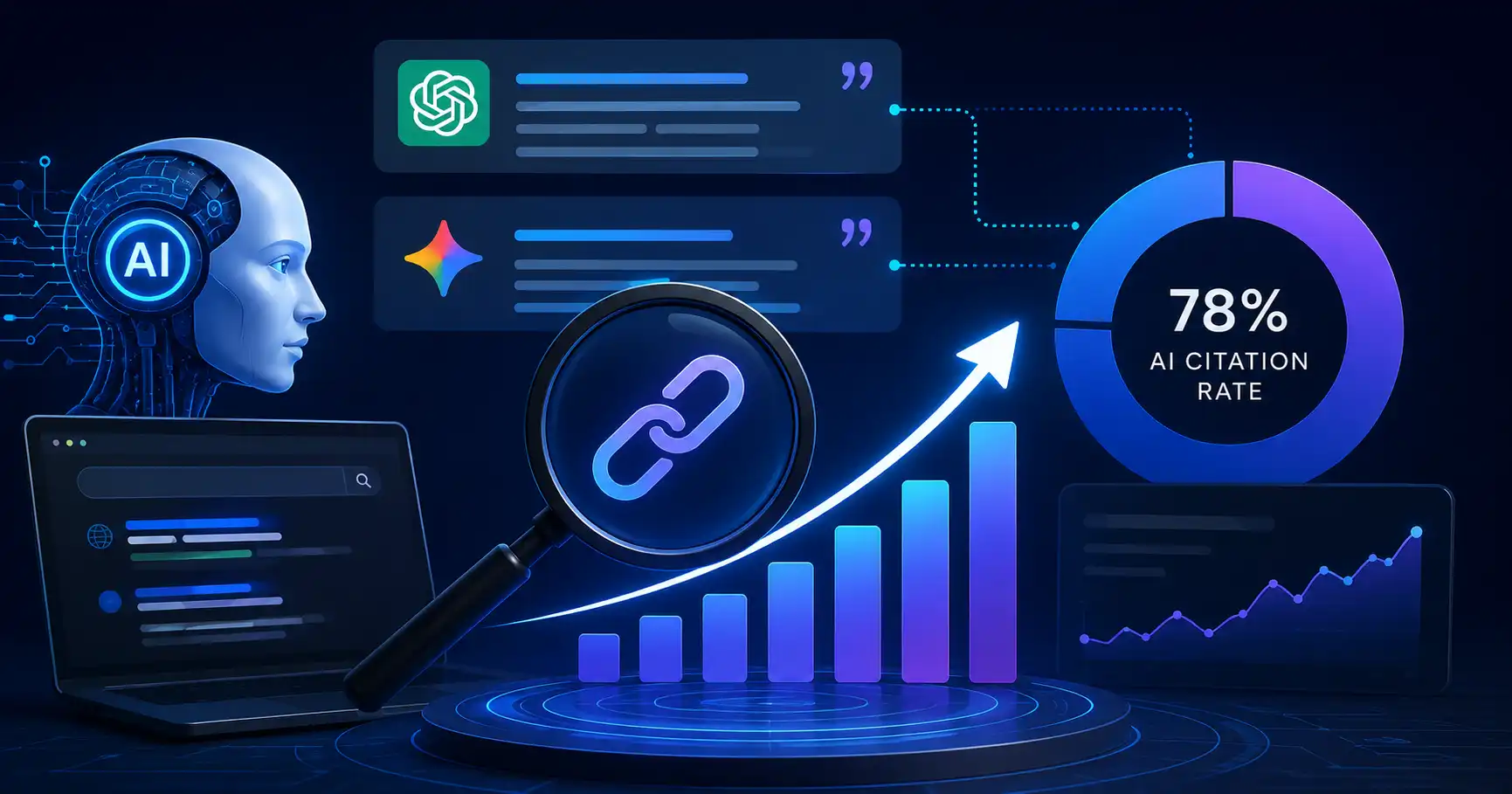
AI Citation Rate is the percentage of your target queries where at least one AI search system cites your content. This guide covers how to define, calculate, benchmark, and improve it — including a manual tracking methodology, a platform segmentation framework (AI Mode vs Perplexity vs ChatGPT Search), proxy indicators in GA4 and GSC, and a 30-query tracking template you can use immediately.

Brand Sentiment & Reputation Signals as an AI Ranking Factor
Brand reputation is now an active AI citation filter — not just a PR metric. AI search systems read review platforms, editorial coverage, Reddit threads, and Knowledge Graph entity data before selecting citation sources. This guide covers which reputation signals carry the most weight, how to audit your brand's current profile, and the practical steps to improve AI citation eligibility through reputation management.

10 AI Tools I Use for Technical SEO Audits (and Exactly How)
The exact 10 AI tools used in every technical SEO audit — not a features list, but the actual workflow: which tool handles which audit phase, the specific Claude and ChatGPT prompts used for crawl analysis and schema generation, and how AI cuts a 20-hour manual audit down to under 10. Based on 150+ site audits over 13 years.
AI Content & Google's Spam Policies: What's Safe to Publish in 2026
Google doesn't penalize AI content — it penalizes spam. This guide explains what scaled content abuse really means, where AI workflows cross the line, a publishing workflow that holds up, and a self-audit checklist to run before you hit publish.
How the Major AI Platforms Compare for SEO
Each AI search platform uses different retrieval logic, citation preferences, and ranking signals. Treating them as one uniform channel is one of the most common and costly mistakes I see in 2026 GEO strategies. The table below summarises the key differences you need to factor into your optimisation approach.
| Platform | Primary Citation Source | Organic Rank Dependency | Schema Benefit | Content Length Sweet Spot | Key 2025–26 Data Point |
|---|---|---|---|---|---|
| Google AI Overviews | Top-10 organic results (76.1% of cited URLs) | High | Strong | 2,000–3,500 words | Appear in 25% of searches; 58% CTR drop when present (Ahrefs, Feb 2026) |
| Google AI Mode | Broad web + GBP; 93% zero-click rate | Moderate | Strong | 2,300+ words | Only 13.7% overlap with AI Overview citations (Ahrefs, Dec 2025) |
| ChatGPT Search | Pages at position 21+ in ~90% of cases | Low | Moderate | 2,900+ words (59% more likely to cite) | Drives 87.4% of all AI referral traffic (Conductor, 2026) |
| Perplexity AI | Current news, research, authoritative sites | Mixed | Moderate | Fresh, well-cited content | Drives ~15% of AI referral traffic; 370% YoY growth (SE Ranking, 2025) |
| Google Gemini | Google's own data + GBP + organic | High | Strong | Structured, authoritative pages | Top-3 local pack = 25.9% likelihood of Gemini inclusion (Will Do SEO, 2025) |
| Bing Copilot | Bing index; Bing Places for local | High | Moderate | Comprehensive guides & how-tos | Bing Places presence now a notable ChatGPT local factor (Whitespark, 2025) |
| Voice Assistants (Siri, Alexa+, Gemini) | Bing index (Siri) or Google index (Gemini/Assistant); single source read aloud | High | Strong | 25–35 word spoken answer per section | 8.4B active voice assistants worldwide, surpassing global population (SEOScaleup, 2026) |
The 6 Universal AI Citation Signals
Across Google AI Overviews, ChatGPT Search, Perplexity, and Gemini, the same core signals consistently determine citation probability — regardless of platform. These are the six levers covered in depth across the guides above, each backed by independent research.
Dedicated, comprehensive content
A single, thorough page answering a query completely outperforms a site-wide keyword spread. AI platforms preferentially cite sources that fully address the question in one place. Articles over 2,900 words are 59% more likely to earn a ChatGPT citation than pages under 800 words.
Source: SE Ranking, 2025 (study of 2.3M pages)Structured data and schema
LocalBusiness, FAQPage, HowTo, Article, and Product schema provide machine-readable context that reduces ambiguity. The beginning of your content matters disproportionately — 44.2% of LLM citations come from the first 30% of a page's text.
Source: Growth Memo, February 2026Domain authority and brand mentions
Branded web mentions have a 0.664 correlation with AI Overview appearances — far stronger than backlinks at 0.218. Sites with 350,000+ referring domains are over 5× more likely to be cited in ChatGPT than those with 200. High domain traffic is the single strongest SHAP predictor in citation models.
Source: SE Ranking, Ahrefs 2025Entity consistency across the web
Consistent NAP, business descriptions, and categorisation across your GBP, website, and citation profile help AI systems assemble an accurate, confident picture of your brand entity. Whitespark's 2026 report confirmed AI search signals — drawn from reviews, social, GBP, and on-site content — now formally enter the ranking equation for the first time.
Source: Whitespark Local Search Ranking Factors 2026Review signals and sentiment depth
AI review summaries draw from your full review corpus — not just your star rating. Reviews that name specific services, outcomes, and staff build a richer, more citable profile. Whitespark's 2026 report notes review recency has moved into the top-tier ranking signals, rewarding businesses with a consistent cadence of fresh, detailed reviews.
Source: Whitespark 2026 / SE Ranking 2025Q&A structured on-page content
AI platforms preferentially extract content written in explicit question-and-answer format. ChatGPT is demonstrably more likely to cite content that contains a question mark, uses definite language rather than vague qualifiers, and has a high entity density. FAQ sections using natural language questions increase citation probability significantly.
Source: Growth Memo, February 2026Recommended Learning Path
If you're new to AI Search SEO, work through the guides in this order. Already mid-way through your GEO journey? Jump directly to the guide that addresses your current bottleneck.
GEO & AEO: Rank in AI Overviews & LLMs
Build the strategic framework before touching any platform-specific tactics.
→ Start here Step 2 — ResearchKeyword Research for Conversational Queries
Understand the queries AI platforms answer before creating content for them.
→ Then this Step 3 — ArchitectureAEO & GEO Strategy for New Websites
Build or restructure your site with AI citation in mind from the ground up.
→ Then this Step 4 — PlatformsOptimise for Perplexity, ChatGPT & Gemini
Apply platform-specific tactics once the universal foundations are in place.
→ Then this Step 5 — Google Deep DiveGoogle AI Mode SEO Guide
Specialise on Google's AI Mode — the highest-traffic AI search surface in 2026.
→ Then this Step 6 — ToolsAI SEO Tools Guide
Choose the right tools to monitor, measure, and scale your AI visibility work.
→ Then this Step 7 — ScaleClaude AI SEO Automation
Automate the repeatable parts of your AI SEO workflow to free up time for strategy.
→ Then this Step 8 — MeasureAI Citation Rate: Track Your GEO Performance
Define, calculate, and improve the metric that tells you whether your GEO work is actually moving the needle.
→ Then this Step 9 — TrustBrand Sentiment as an AI Ranking Factor
Address the off-page reputation signals that act as a filter on AI citation eligibility — the layer most sites overlook.
→ Then this Step 10 — Audit10 AI Tools for Technical SEO Audits
The exact toolkit and workflows to audit your site's technical health for AI search readiness — with the prompts that do the heavy lifting.
→ Then this Step 11 — VoiceVoice Search & Conversational AEO
Extend the same citation foundation to Siri, Alexa+, Gemini, and ChatGPT Voice — the channel GA4 can't measure directly.
→ Then this Step 12 — Content SafetyAI Content & Google's Spam Policies
Publish at AI-assisted scale without tripping scaled content abuse — the safe workflow and the pre-publish self-audit.
→ Complete the path